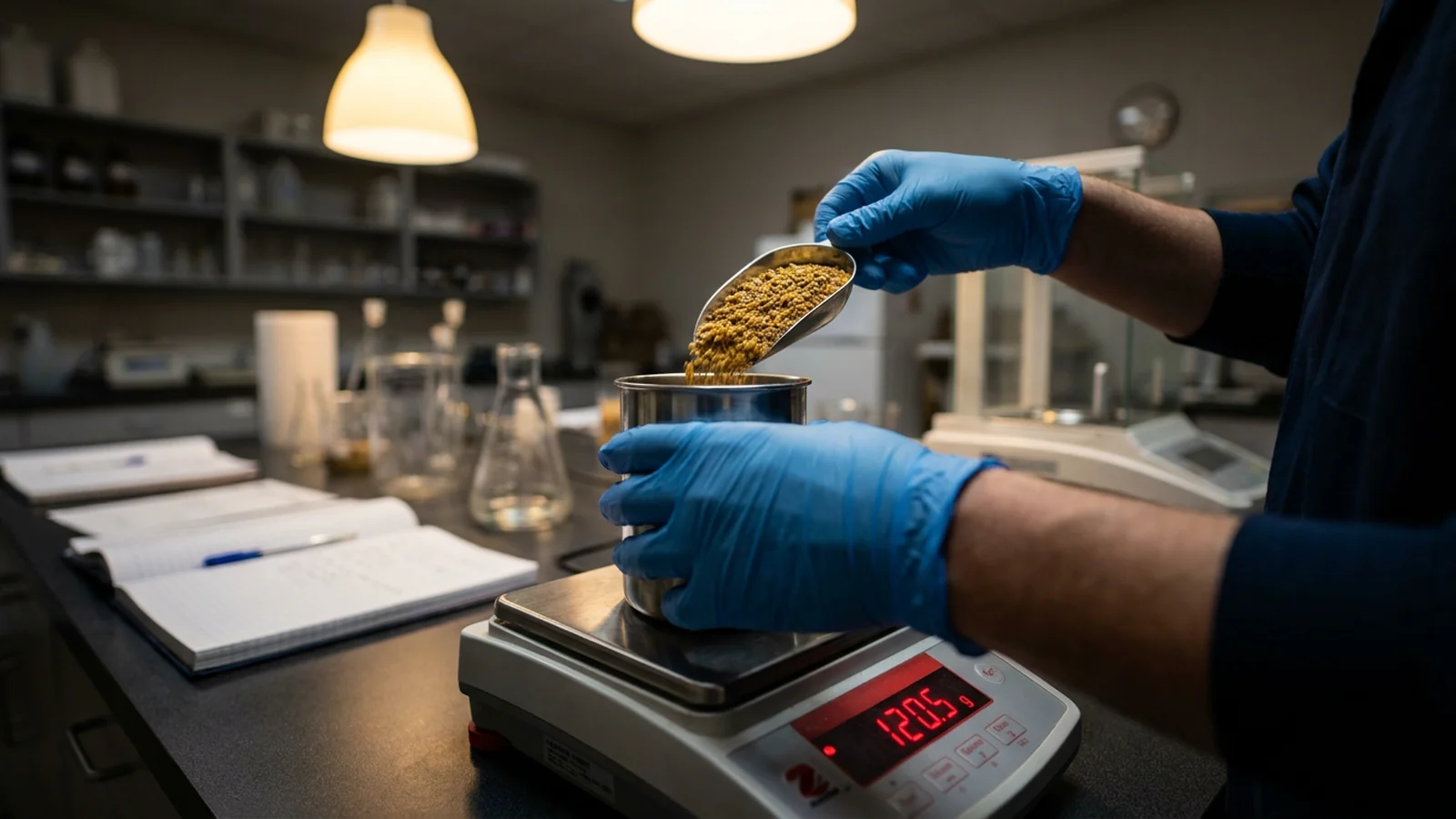
NSP enzymes in corn–soya broiler diets: what xylanase and phytase actually change
Enzyme supplementation is often justified on feed cost alone. The clinical effects — digesta viscosity, litter condition, available phosphorus — are the more useful argument.
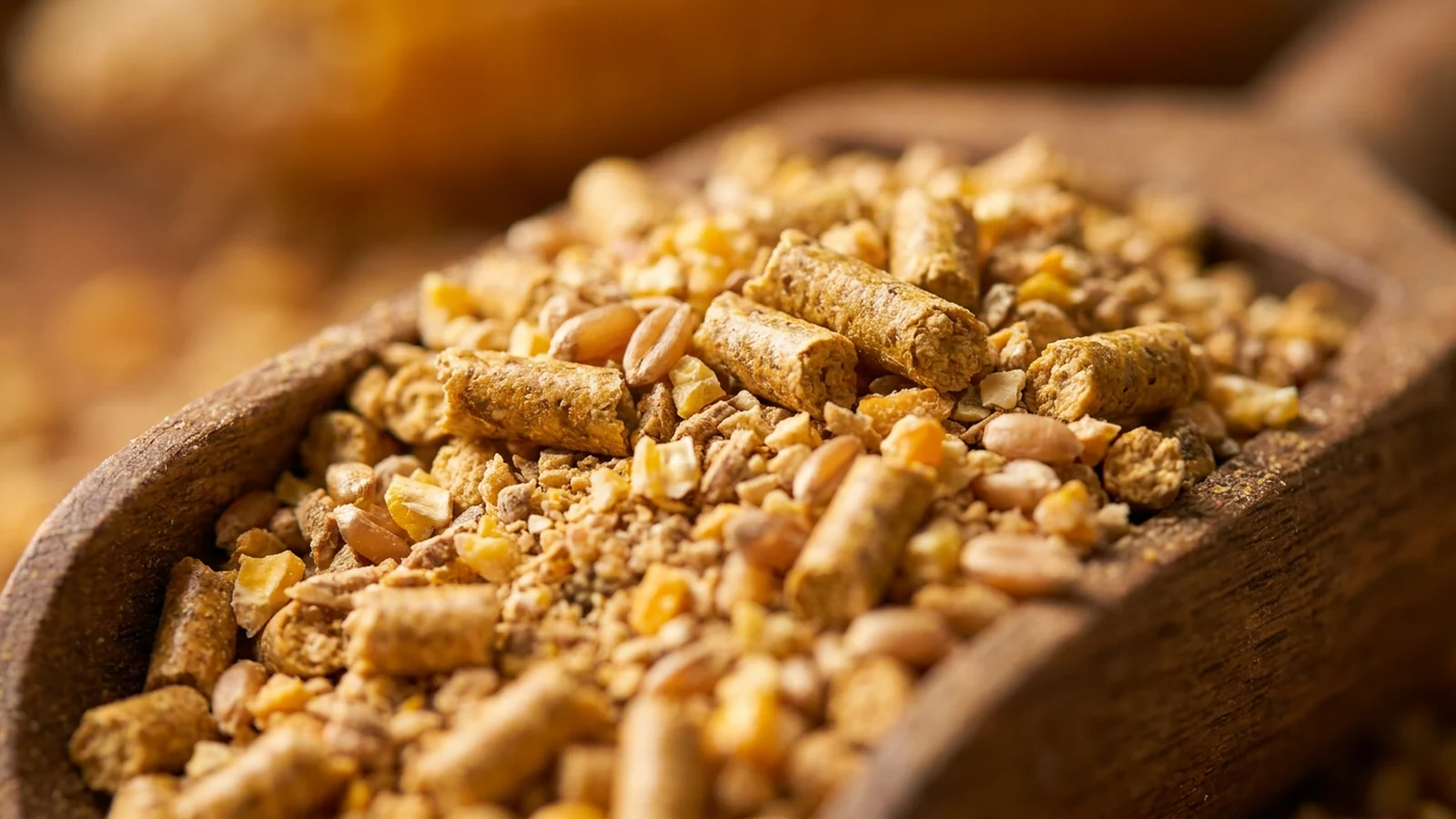
Non-starch polysaccharides are the fraction of a cereal-based diet the bird cannot digest with its own enzyme complement. In corn–soya diets they are lower than in wheat or barley diets, which is why enzyme use in corn-based systems is sometimes treated as optional. The clinical picture argues otherwise.
Viscosity and litter
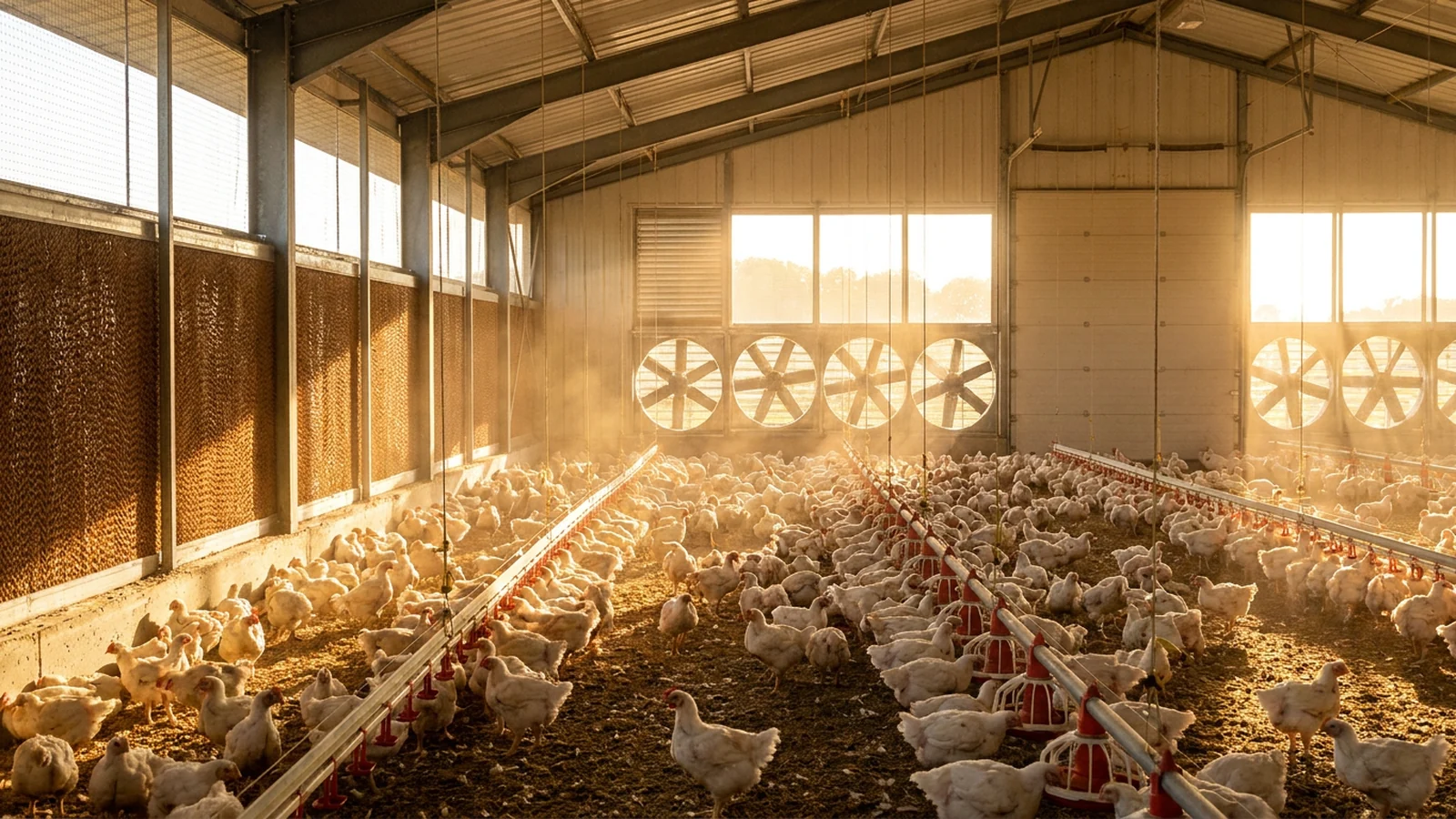
Soluble NSP raise the viscosity of the digesta. Higher viscosity slows the diffusion of substrate and enzyme alike, reduces nutrient contact with the brush border, and increases the water content of excreta. Wet litter is not simply a housekeeping problem: it drives footpad dermatitis, raises ammonia, and creates the moisture conditions that favour coccidial oocyst sporulation.
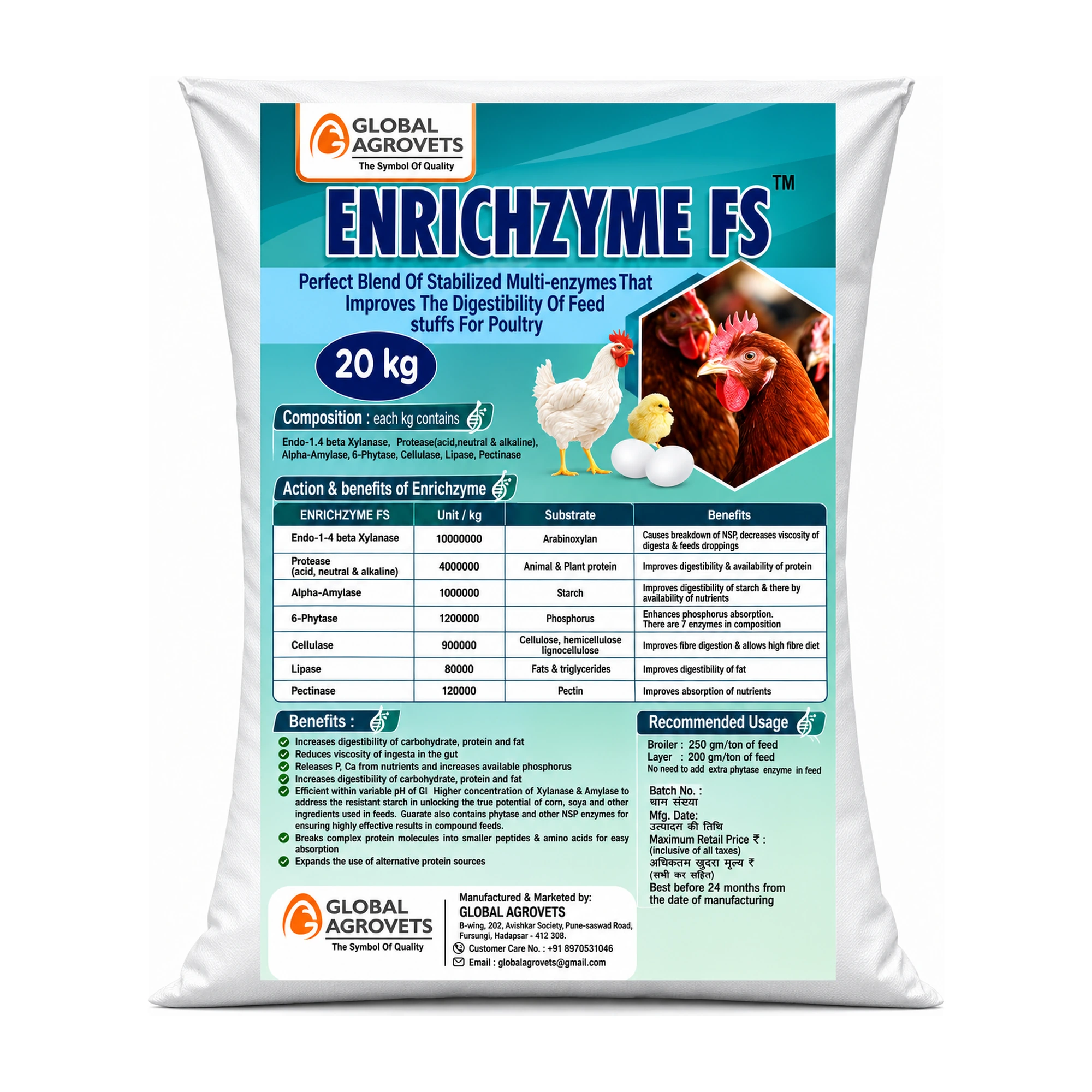
Xylanase reduces that viscosity by cleaving arabinoxylan into shorter fragments. The change shows up first in litter condition and only later in the feed conversion figure.
Resistant starch is the corn-specific case
Corn carries a resistant starch fraction that escapes amylolytic digestion in the small intestine and ferments distally. A higher amylase concentration addresses that fraction directly, which is why enzyme blends intended for corn–soya diets are weighted differently from those designed for wheat.
Phytase and the phosphorus question
Between roughly two-thirds and three-quarters of the phosphorus in plant feedstuffs is bound as phytate and largely unavailable to the bird. Phytase releases a substantial share of it, which reduces the inorganic phosphate the formulation has to buy in and reduces phosphorus excretion. The secondary effect matters as much: phytate chelates calcium, zinc and other cations, so hydrolysing it also releases those.
The enzyme argument that persuades a nutritionist is feed cost. The one that persuades a veterinarian is litter, and litter is where the flock health consequences begin.
Practical specification points
- Confirm the blend is active across the pH range of the gastrointestinal tract, not only at the optimum used in the assay.
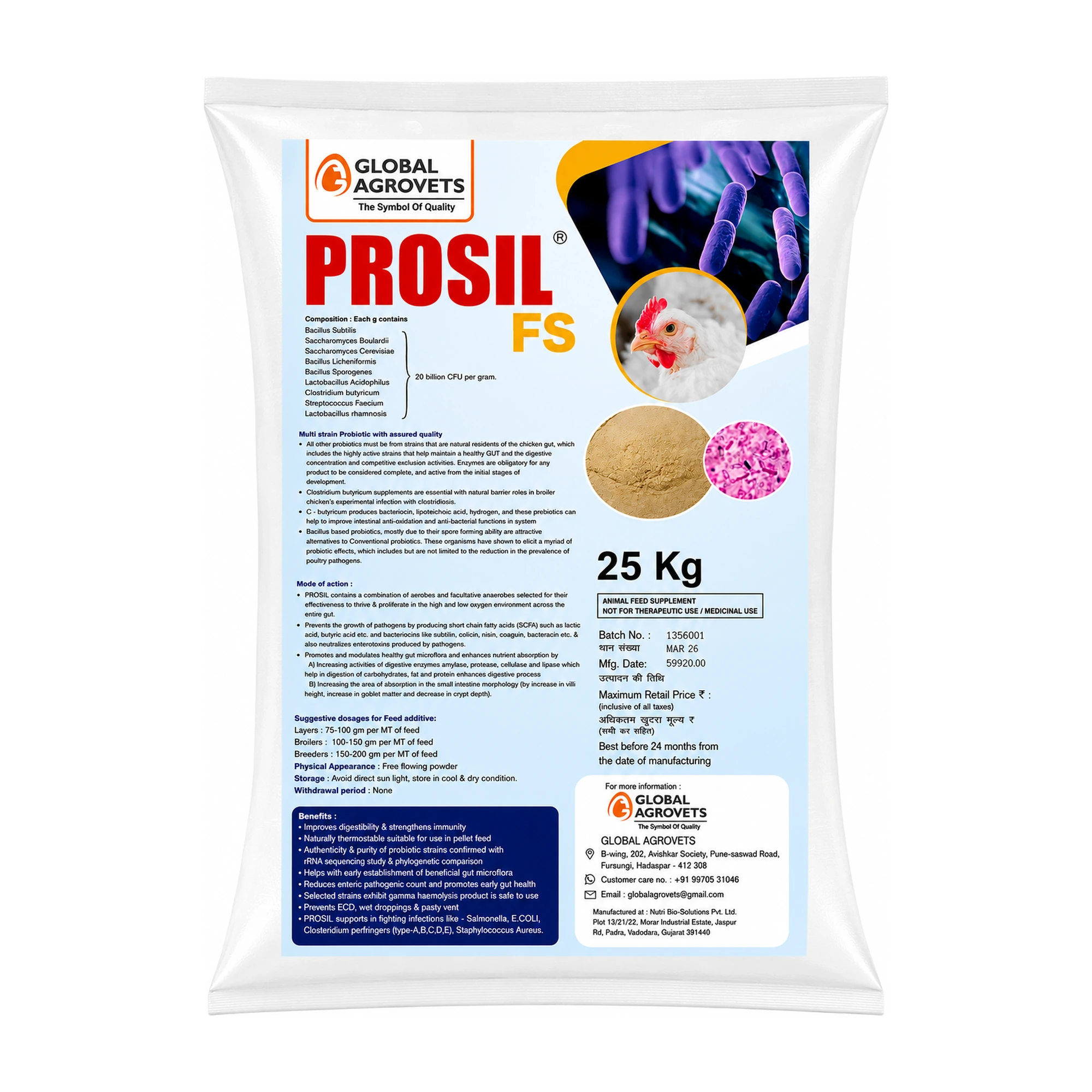
- Check thermostability against the actual conditioning temperature of the pellet line.
- Count the enzymes: a blend carrying phytase plus a range of NSP enzymes addresses more substrates than a single-activity product.
- Protease inclusion widens the usable protein sources, which is the mechanism behind alternative-protein formulations rather than a separate claim.