Choosing a mycotoxin binder: why surface area and pore size decide the outcome
Two binders can carry the same inclusion rate and behave completely differently in the gut. The difference is physical, and it is measurable.
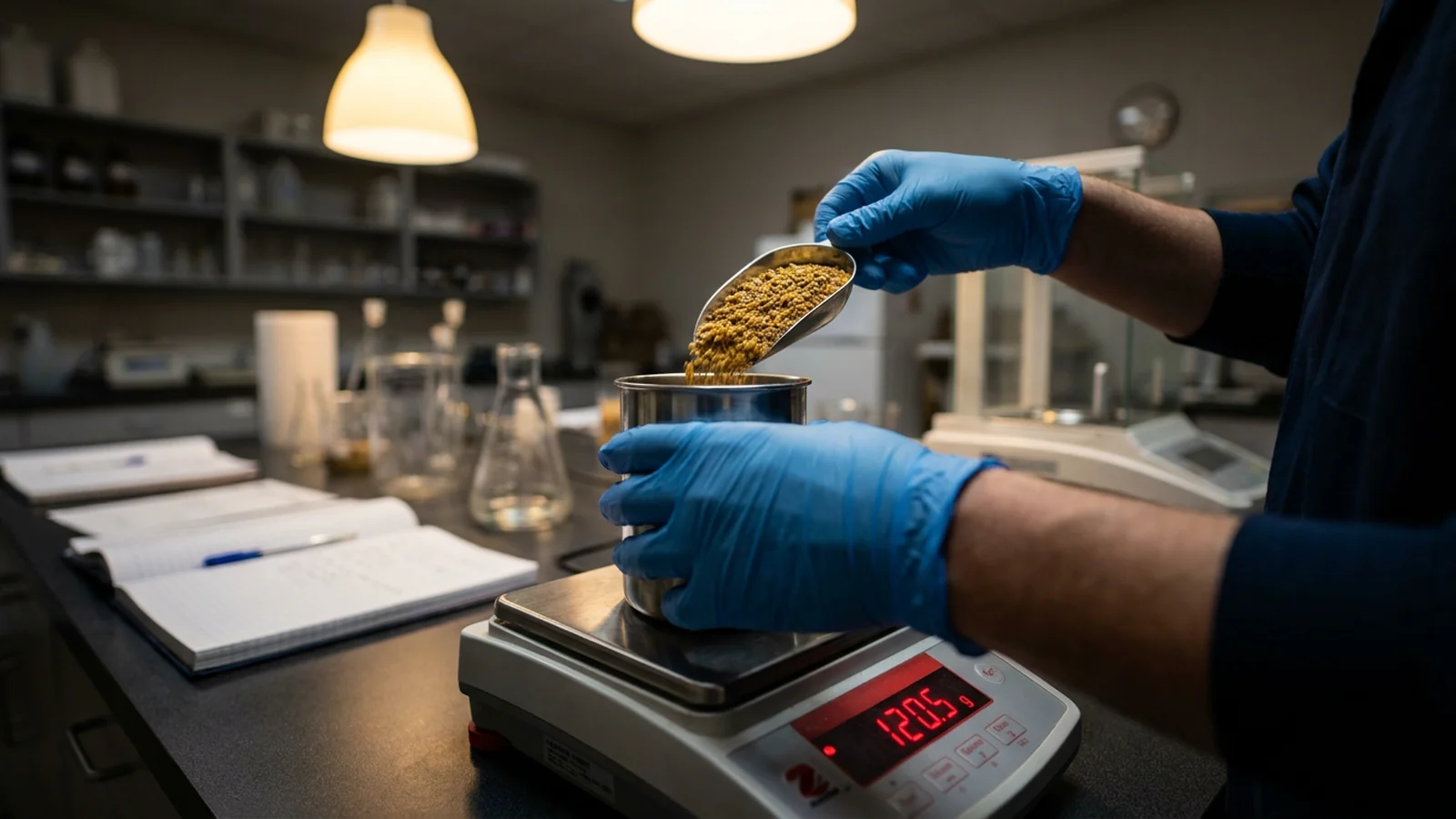
Mycotoxin binders are specified commercially by inclusion rate, and clinically by something quite different: the physical characteristics of the adsorbent. Two products included at the same rate can bind very different toxin loads, and — more importantly — can differ in whether they also strip out the vitamins and trace minerals the ration was formulated to deliver.
Surface area sets the ceiling
Adsorption happens at the surface. The specific surface area of an adsorbent, expressed in square metres per gram, is therefore the upper limit on how much toxin a given inclusion can hold. Clay adsorbents in commercial use vary widely on this measure, and the figure is worth asking for by name rather than accepting a general claim of high binding capacity.
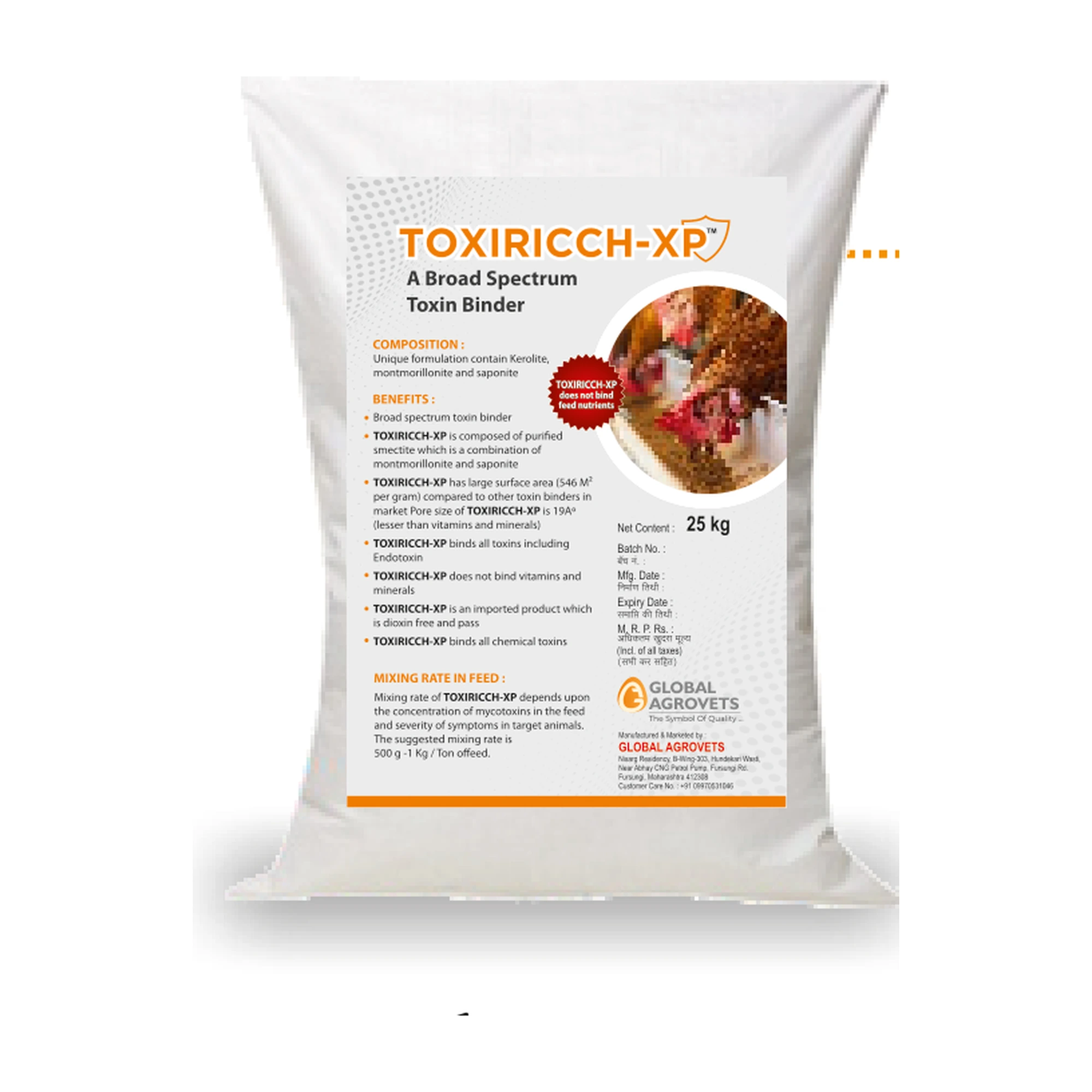
Purified smectite — a combination of montmorillonite and saponite — is used because its layered structure presents a large accessible surface relative to its mass. TOXIRICCH-XP is specified at 546 m²/g, and that figure is the reason it can be included without a proportionally large displacement of the ration.
Pore size decides selectivity
Surface area alone would make an aggressive, indiscriminate binder. Selectivity comes from pore geometry. A pore small enough to admit a mycotoxin molecule but too small to admit a vitamin or a chelated trace mineral will bind the first and leave the second in the digesta.
A 19 Å pore is below the molecular dimensions of the fat-soluble vitamins and of most mineral complexes used in premix. That is the mechanism behind the claim that a binder does not bind nutrients — not an additive that somehow protects them, but a pore that never admits them in the first place.
What to check on a technical sheet
- Specific surface area in m²/g, stated as a number rather than as an adjective.
- Pore size in ångströms, and whether the supplier will say what it excludes.
- Whether endotoxin is included in the binding claim, or only the mycotoxin groups.
- Dioxin status — clay adsorbents are mined material, and dioxin contamination is a real risk in unverified sources.
- Which toxin groups are covered: aflatoxins, ochratoxins and zearalenones behave differently, and a binder effective against one is not automatically effective against the others.
Why this matters beyond the liver
Chronic low-level mycotoxin exposure rarely presents as a clean clinical picture. It presents as immunosuppression: vaccine responses that underperform, secondary infections that should not have established, and mortality that sits a little above where the flock’s management would predict. Where an unexplained loss of livability is being investigated, feed toxin load belongs early in the differential rather than at the end of it.