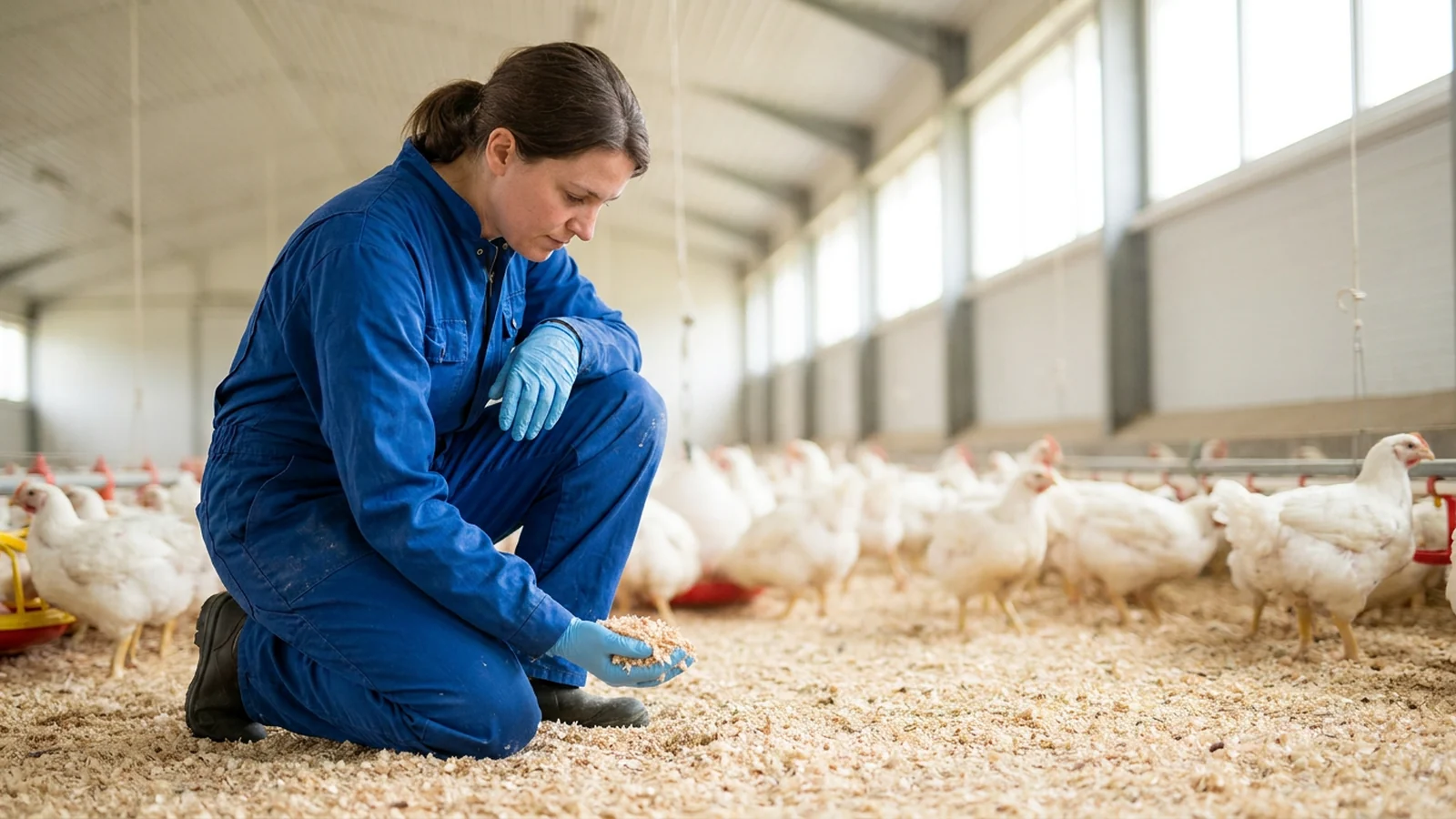
How to tell if lice or mites are in your poultry shed
External parasites cost weight and eggs long before you see them on a bird. Here is where to look, and when.
Lice, mites, ticks and bedbugs all feed on the bird. They produce the same result whichever one you have: slower growth, lower egg production, and in a heavy infestation — particularly in young birds — deaths. Some of them also carry disease from one bird to the next.
Check at night, not during the day
Red mites feed at night and hide in cracks during the day, so a daytime inspection of the birds can look completely clean while the shed is heavily infested. Go in after dark with a torch and look at the birds directly, and look in the joints of the cages, under perch ends and behind any loose fitting.
Where to look on the bird
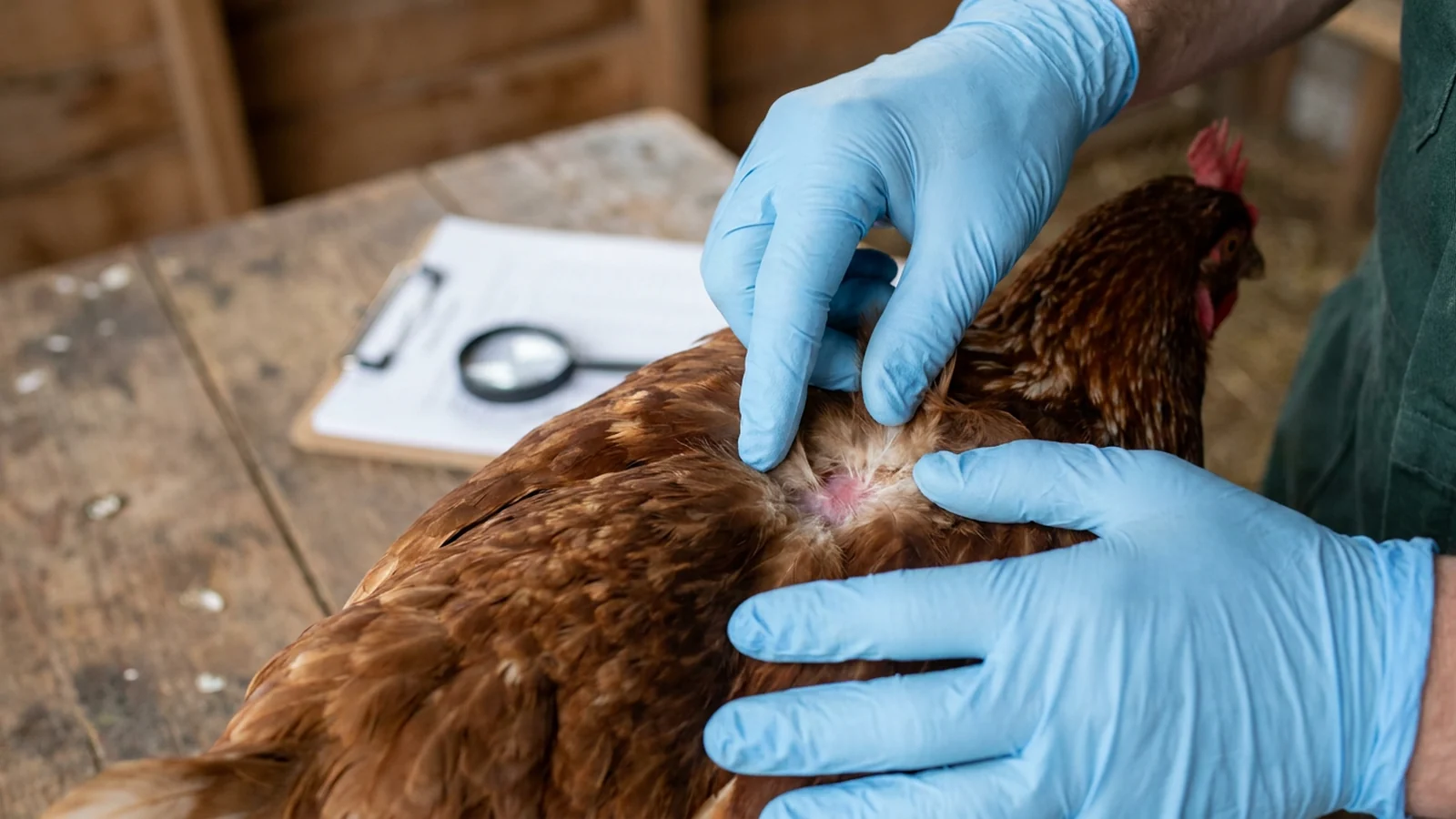
- Around the vent — part the feathers and look at the skin, not the feather tips.
- Under the wings.
- At the base of the feathers on the back, where lice eggs form pale clusters on the shaft.
- On the comb and wattles, which look pale in a bird losing blood to parasites.
Signs before you see the parasite
- Birds preening, scratching or restless at night.
- Feed going in normally but weight not coming on.
- Egg production falling with no other explanation.
- Dark specks on the eggs or on your hand after handling a bird.
Treat the shed as well as the bird
Treating only the birds leaves the eggs and the hiding places, and the infestation returns in a few weeks. A shed treatment that kills the eggs is what breaks the cycle. Clear old litter, spray the housing including cracks and joints, and repeat the application on the interval the product states — the second application is the one that catches the newly hatched stage.